When transcription is the main goal, tiny details make a big difference. A few missed names can throw off the entire conversation, inconsistent punctuation can make sentences hard to follow, and weak speaker labeling turns a “transcript” into a confusing wall of text. Add slow turnaround times, limited editing tools, or clunky exports, and you end up spending more time cleaning up transcripts than actually using them.
If Grain AI isn’t giving you the accuracy or editing controls you need, there are several Grain AI alternatives built specifically for cleaner, faster meeting transcriptions – often with better language support, vocabulary learning, and export options. In this article, we’ll share six top picks for 2026 that prioritize transcription quality first, while still offering helpful extras like timestamps, highlights, summaries, and searchable archives so you can turn meetings into reliable written records.
Quick Summary – Best Grain AI Alternatives
- FuseBase: Bot-free recorder that turns every call into a branded mini-room with recap, assets, and next steps; AI agents create tasks, trackers, and follow-ups automatically.
- Otter.ai: Transcription-first workhorse with real-time captions, multi-speaker ID, and searchable notes; great for Zoom-centric teams.
- Tactiq: Browser-first (Chrome) live transcripts, AI summaries, and instant task handoffs to Jira/Slack for Meet/Zoom/Teams.
- tl;dv: Multi-language recorder with timestamped highlights, searchable library, and post-call summaries across Meet, Teams, and Zoom.
- Fathom: Free, fast recording and summaries with instant video clips and CRM sync (Salesforce, HubSpot); ideal for individuals or lean teams.
- Bluedot: Bot-free, Chrome extension capture with 100+ languages, advanced speaker ID, AI follow-ups, and private-by-default transcripts.
What is Grain AI?
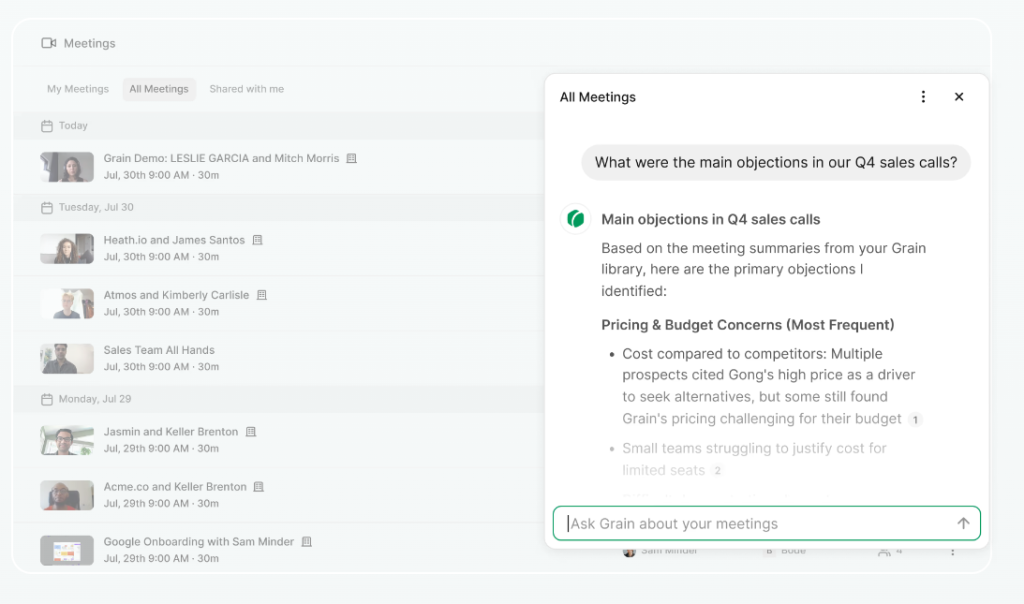
Grain AI is an AI meeting tool that records calls and turns them into searchable notes, transcripts, and shareable highlights. It’s commonly used to capture important moments from meetings – like key customer quotes, decisions, objections, and next steps – then share those clips and summaries with teammates or stakeholders without making them watch the full recording.
For transcription-focused workflows, Grain AI typically provides speaker-labeled transcripts, timestamps, and AI-generated summaries that help you review conversations faster. It’s especially popular with sales, customer success, and research teams who want a simple way to store calls, pull clips, and create a lightweight “meeting library” for coaching, handoffs, and collaboration.
That said, if your priority is high-accuracy transcription (clean formatting, strong speaker diarization, easy editing, and reliable exports), you may want a more transcription-first solution – hence the Grain AI alternatives covered in this guide.
Grain AI Limitations
Grain streamlines capture and basic insights, but teams focused on reliable transcription workflows and post-call execution may hit ceilings. The gaps show up when you try to centralize recordings, automate downstream handoffs beyond a narrow stack, or level up coaching and governance at scale.
Limited integrations and API flexibility
Grain’s integration coverage is relatively narrow, and its API is limited for project management or CRM uploads. If your stack spans multiple CRMs, dialers, or PM tools, expect extra manual steps or brittle zaps to keep notes and tasks in sync. That adds operational drag and creates sync gaps that undermine data quality over time.
No centralized recording library
There’s no robust call recording library/dashboard to house past conversations. Without a unified archive, it’s harder to retrieve key conversations, audit decisions, or onboard new team members with historical context. As meeting volume grows, the lack of centralized storage complicates compliance checks and slows handoffs across sales, CS, and delivery.
Lack of coaching features
While Grain surfaces conversation basics (such as talk time, filler words), it lacks deeper coaching like auto-call scoring, AI feedback, or playbooks. Managers get fewer signals to standardize best practices or drive targeted rep improvement.
External sharing friction
Users report permission issues when sharing recordings with clients or cross-functional partners. That can lead to broken links, extra follow-ups, and confusion about access. When every recap or highlight requires manual troubleshooting, client experience suffers and internal teams spend cycles on logistics instead of outcomes.
HubSpot-first sync limitations
Automatic CRM sync works best in HubSpot. Teams outside that ecosystem often struggle to reliably sync summaries or automate client notes, dampening the benefits of hands-off transcription-to-CRM workflows.
Best 6 Grain AI Alternatives
1. FuseBase
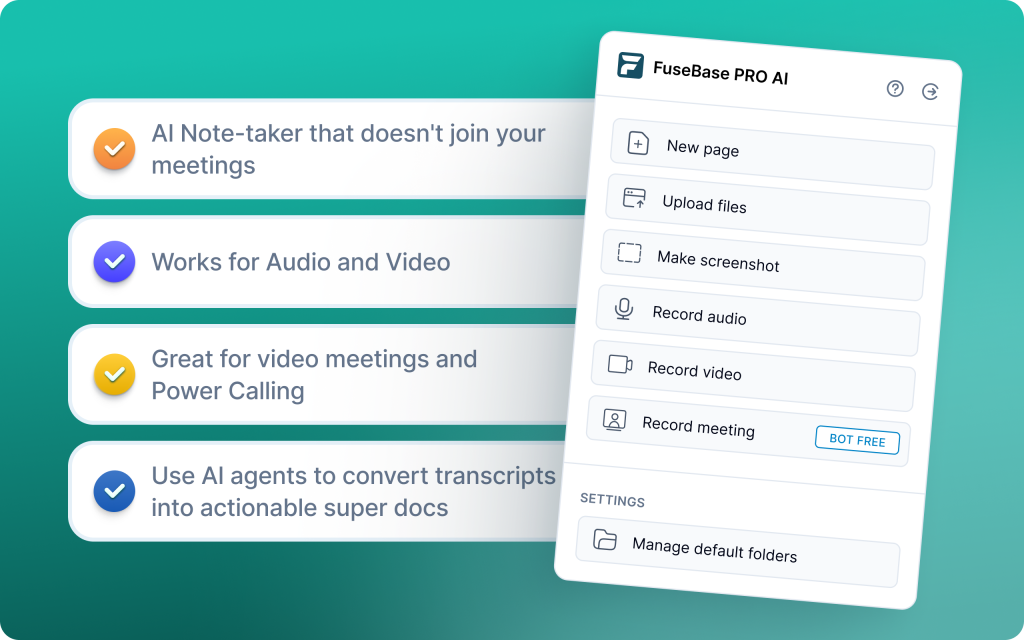
FuseBase is a bot-free AI meeting recorder and workspace that turns every Zoom, Teams, or Meet call into a branded mini-room with recap, files, and next steps – not just a smarter transcript link. Each meeting auto-organizes into a client or deal room under your domain, so external stakeholders land in a guided, premium space. AI agents watch calls for risks, opportunities, and follow-ups, then create tasks, populate trackers, and trigger actions across your stack. Trackers focus on signals that move revenue and retention, like no next meeting booked, budget gaps, scope creep, or renewal risk. Dashboards roll up patterns such as accounts with rising risk or calls missing next steps so leaders can act fast. Result: cleaner client experiences, fewer missed follow-ups, and less manual cleanup after every call.
Best use cases
- Client-ready recaps and assets after sales calls, QBRs, and onboarding sessions
- White-label sharing under your domain for agencies and professional services
- Tracking real business signals across accounts to reduce churn and leakage
- Auto-creating tasks and follow-ups from call moments in your existing tools
- Building a persistent mini-room history per client for smoother handoffs and delivery
2. Otter.ai
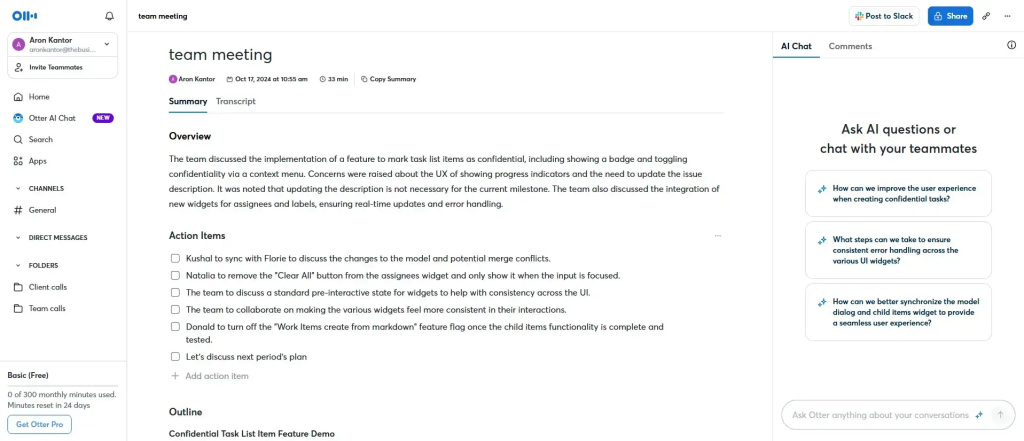
Otter.ai remains a major player for real-time transcription, turning meetings and interviews into searchable, shareable text with multi-speaker identification. It emphasizes transcription accuracy and speed, layering summaries, action items, and instant collaboration (comments, assignments, AI chat) on top. Teams can follow along with live captions, highlight key points in the moment, and later search by keywords and phrases to retrieve decisions fast. Seamless Zoom integration enables automatic capture and summaries so you can stay focused on the discussion. Note: Otter is English-first and may struggle with heavy accents or noisy environments, and the free plan limits monthly minutes.
Best use-cases
- Creating searchable, shareable records of recurring meetings and interviews
- Real-time captions and follow-along notes for live discussions and workshops
- Quick post-call summaries and action item tracking without complex setup
- Zoom-first teams that want automatic capture and centralization of transcripts
3. Tactiq
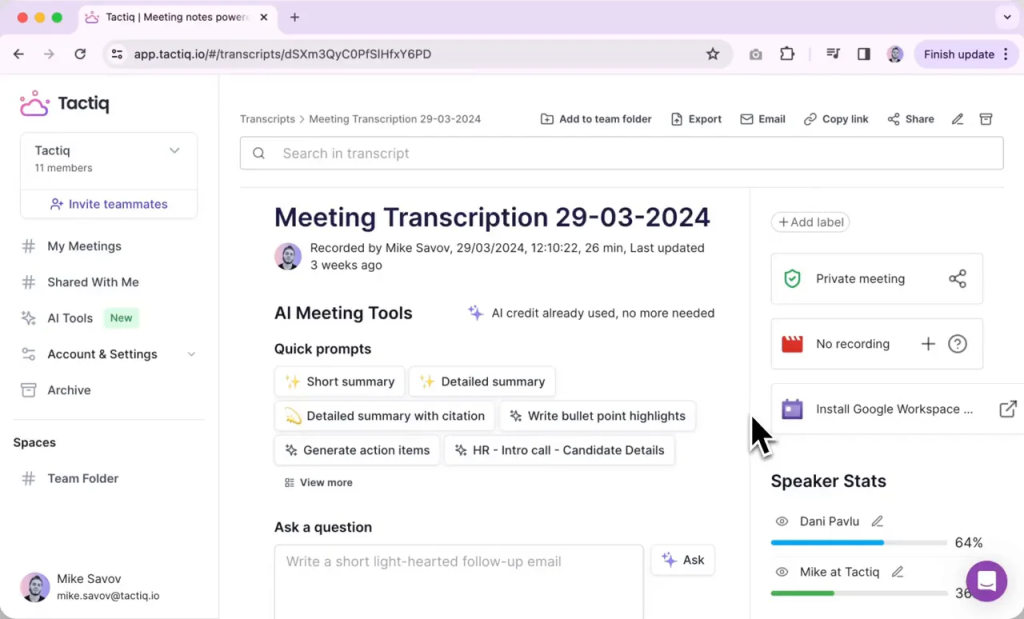
Tactiq is a browser-first assistant for real-time transcription and task management that layers directly on Google Meet, Zoom, and Microsoft Teams via a Chrome extension. It captures live captions with speaker identification, lets you timestamp and highlight key moments in the meeting sidebar, and generates AI summaries, action items, agendas, and follow-up emails. After the call, you can query the AI about what was discussed, access recordings, and push tasks into tools like Jira or Slack with simple automations. It also supports uploading past transcripts or audio for cleaner summaries and improved context. Note: accuracy can drop with unclear audio or heavy accents, especially in some non-English languages.
Best use-cases
- Real-time transcription and captions with speaker IDs during Meet/Zoom/Teams calls
- Instant action items and professional follow-up emails from live discussions
- Dev and ops handoffs: create Jira tickets, share notes to Slack, and track tasks
- Post-call knowledge capture: upload past transcripts/audio for better summaries and search
4. tl;dv
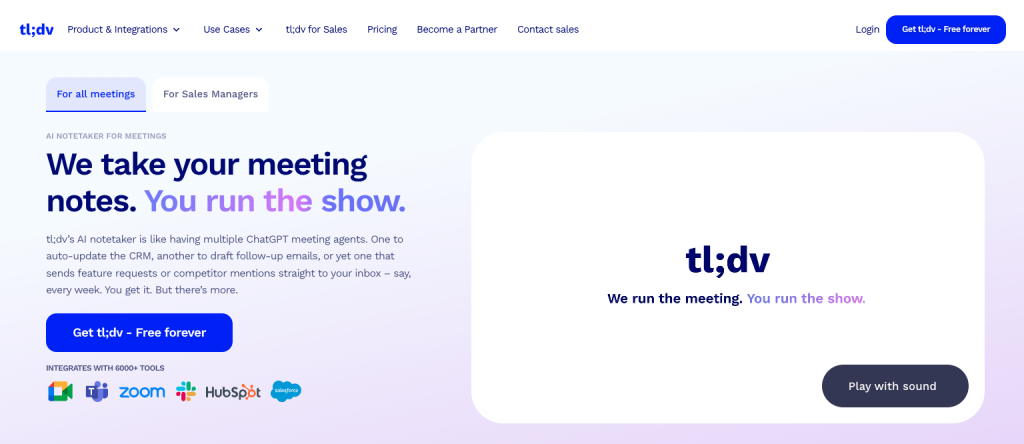
tl;dv is an AI-powered recorder for Google Meet, Microsoft Teams, and Zoom that delivers real-time, multi-language transcription with timestamped highlights and post-call AI summaries. Workshop and GTM teams use it to capture group discussions, surface themes, and tailor next sessions with a data-driven approach. A built-in library makes past meetings searchable by keywords, while multi-meeting intelligence spots patterns and emails reports. Beyond transcription, tl;dv can auto-update CRM, generate follow-up emails, and support team collaboration with tagging and assignments. Note: advanced conversation analytics are limited, and the free plan caps features and storage.
Best use-cases
- Accurate, real-time transcription and highlights across Meet/Teams/Zoom in 30+ languages
- Workshop facilitation: capture group input, analyze themes, and plan next sessions
- Searchable recording library for quick retrieval and team onboarding
- Automated follow-ups and basic CRM updates from post-call summaries
5. Fathom
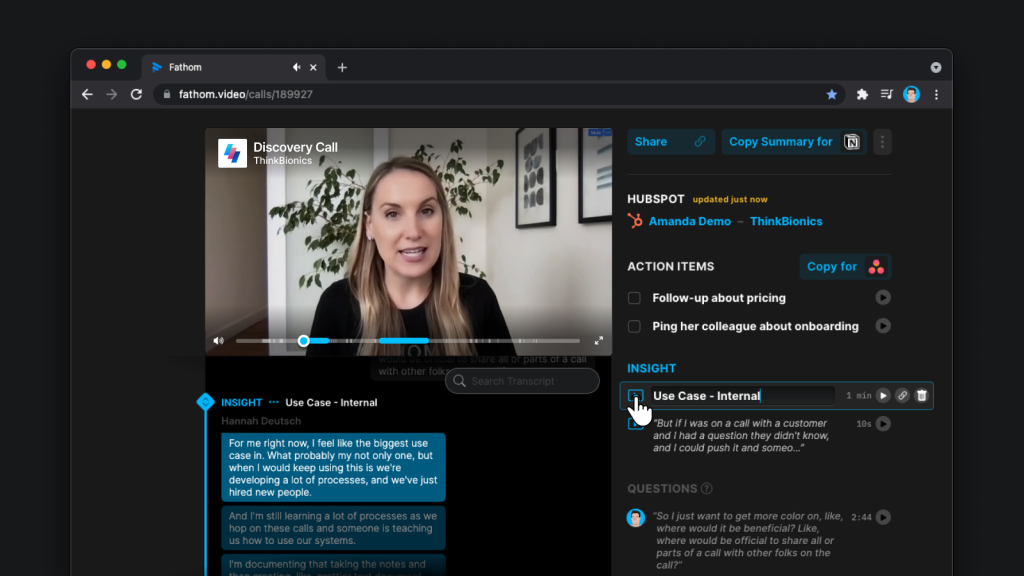
Fathom is a free meeting assistant that records, transcribes, and summarizes calls so you can stay focused on the conversation. It is best for capturing sales insights and crisp call summaries, with templates for sales and CS that adapt to different meeting types. You can share short video clips instead of wall-of-text notes, giving richer context for Slack updates or internal handoffs. Seamless CRM sync pushes summaries and tasks to Salesforce and HubSpot automatically. Note: customization of summary style is limited, and accuracy can drop in noisy or overlapping audio.
Best use-cases
- Fast, no-cost capture and summaries for individuals or lean teams
- Sales and CS calls that benefit from quick video clips and action items
- Auto-syncing notes and tasks to Salesforce or HubSpot after meetings
- Simple team onboarding with searchable transcripts on paid tiers
6. Bluedot
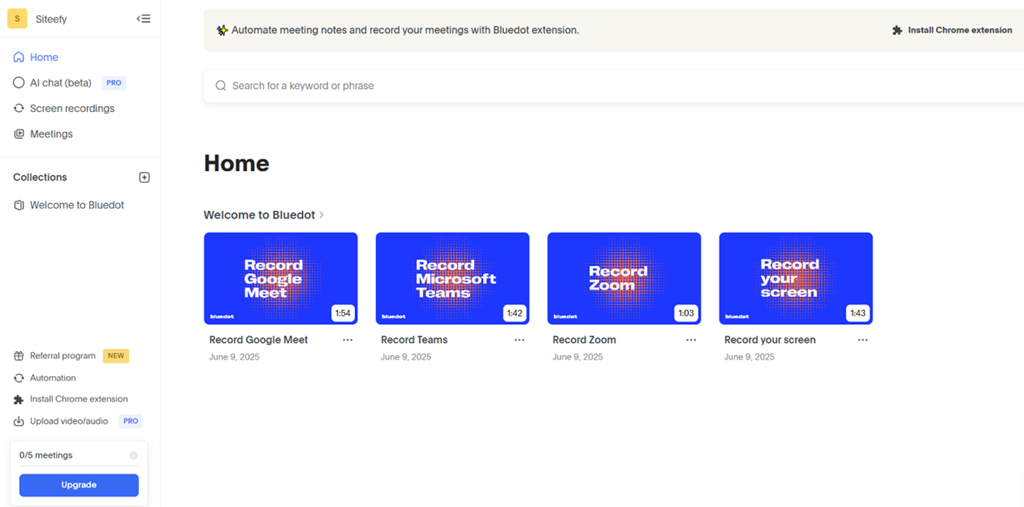
Bluedot is a bot-free, Chrome extension-based meeting assistant that delivers fast, accurate transcription and notes without inviting a bot to your calls. It supports 100+ languages, advanced speaker identification, and tight CRM integrations, generating transcripts and structured notes in seconds. Teams can ask AI questions about the meeting, auto-draft follow-up emails, and search across all transcripts for quick retrieval. For richer context, you can edit video by editing the transcript, annotate moments, and share highlights. Built for sales, client-facing, and project teams, Bluedot runs across macOS, Windows, iOS, Android, and Chrome with a private-by-default approach.
Best use-cases
- Bot-free, multilingual capture for global teams needing clean transcripts and quick notes
- Sales and CS follow-ups: use AI chat to generate instant emails and CRM updates
- Privacy-sensitive environments that want recording without third-party bots joining
- Fast highlight reels and transcript-based video edits for internal updates and enablement
Conclusion
In 2026, the best Grain alternatives do more than transcribe – they shorten time to next step, cut missed follow-ups, and make outcomes obvious to clients and teams. Prioritize bot-free capture where it matters, privacy-aware processing, and automations that push tasks, summaries, and risks into the tools you already use.
- Need client-ready recaps, branded shareable rooms, and AI follow-through – pick FuseBase
- Need fast, searchable transcripts with live captions in Zoom-heavy workflows – pick Otter.ai
- Need Chrome-first live transcripts with instant tasks to Jira/Slack – pick Tactiq
- Need multi-language capture with timestamped highlights and a searchable library – pick tl;dv
- Need free, frictionless capture with instant video clips and simple CRM sync – pick Fathom
- Need bot-free, multilingual capture with advanced speaker ID and quick AI follow-ups – pick Bluedot
Whichever path you pick, demand measurable lift: faster time to first action, 30-50% fewer unlogged follow-ups, clearer ownership on next steps, and earlier visibility into churn or scope creep. That is how you turn meeting transcripts into execution.