Looking for a quick shortlist you can actually act on? You’re not alone. With so many meeting recorders and AI assistants on the market, it’s hard to tell which ones are truly better and which are just “different.” This ranked list of the top 10 Read.ai alternatives and competitors focuses on what matters most: note quality, ease of use, integrations, privacy controls, and overall value.
To make your decision easier, we’ll highlight what each tool is best at – whether that’s sales call insights, internal meeting documentation, customer research, or secure transcription for sensitive teams. Skim the list, pick your top contenders, and you’ll be ready to test the best fit in a single afternoon – without spending weeks in analysis paralysis.
TL;DR – Best Read.ai Competitors
- FuseBase – Best for turning meeting notes into organized team knowledge and client-ready docs.
- Otter.ai – Best for fast, reliable transcription with simple sharing and search.
- Avoma – Best for sales + customer-facing teams that want notes, coaching, and pipeline workflows.
- Fireflies.ai – Best all-around option with broad integrations and solid automation.
- Fathom – Best for quick summaries and highlights with a lightweight, easy setup.
- tl;dv – Best for recording, timestamps, and sharing key moments across teams.
- Gong – Best for revenue teams that need deep call analytics and deal insights.
- MeetGeek – Best for automated recaps, action items, and follow-ups with strong structure.
- Supernormal – Best for clean, structured notes that are easy to skim and share.
- Fellow – Best for meeting management (agendas, decisions, action items) plus notes in one place.
What is Read.ai?
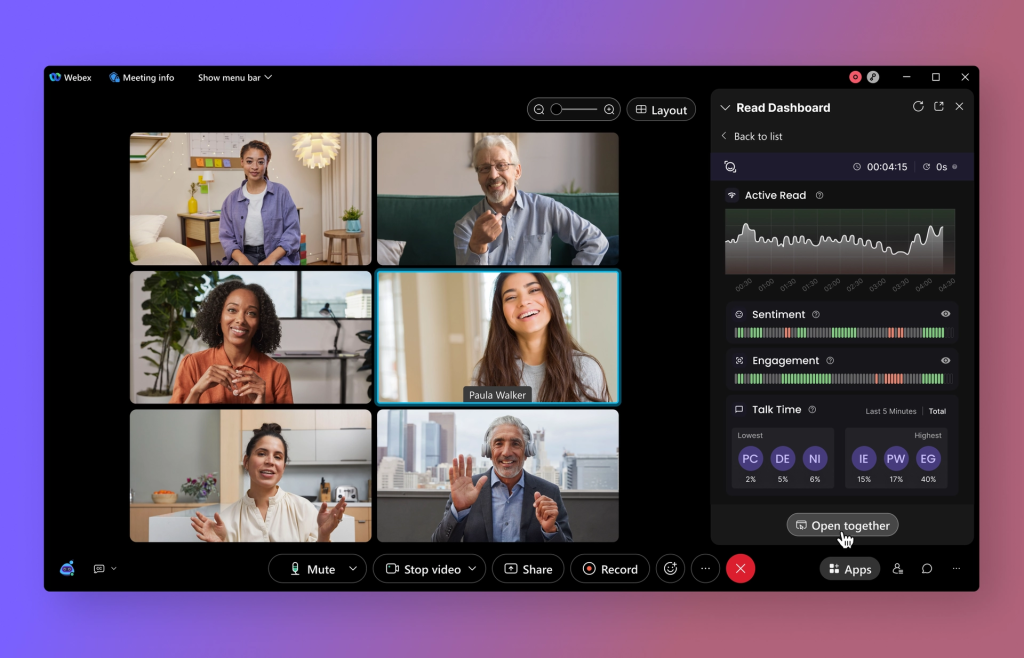
Read.ai is a meeting intelligence tool that blends fast transcription with engagement analytics and speaker coaching. Transcription 2.0 adds real-time sentiment, audience reactions, and performance cues, while Search Copilot lets you ask questions in plain English to find moments, decisions, and follow ups across meetings, emails, and docs. It shines in larger or cross-functional teams that want consistent summaries, searchable history, and insights dashboards. Setup is quick and translations are strong, but users note a limited free tier and occasional friction with the bot attaching to calendars or joining after deactivation.
What to Look For in Read.ai Alternatives?
When comparing Read.ai Alternatives, focus on the features that actually save time after meetings – not just flashy summaries.
Transcription accuracy
Look beyond “high accuracy” claims. The best tools handle:
- Multiple speakers and interruptions
- Accents and fast talkers
- Noisy rooms and poor mics
- Domain-specific terms (product names, jargon, acronyms)
Summary quality you can trust
A great summary should feel like a strong meeting recap from a human:
- Clear decisions + key takeaways
- Action items with owners and deadlines
- Minimal hallucinations or missing details
Action items and follow-ups
The biggest ROI often comes after the call. Top tools can:
- Detect tasks automatically
- Assign owners or tag teammates
- Generate follow-up emails/messages
- Push tasks into your PM tool (Asana, Jira, ClickUp, etc.)
Integrations with your stack
Make sure it fits where your team already works:
- Calendar (Google/Microsoft)
- Video calls (Zoom, Google Meet, Teams)
- Docs/knowledge (Notion, Confluence, Google Docs)
- Messaging (Slack)
- CRM (HubSpot, Salesforce) for sales teams
Search, sharing, and collaboration
Notes are only useful if people can find and use them:
- Fast search across meetings
- Shareable links with access control
- Team spaces, folders, or project tagging
Privacy, security, and compliance
If you deal with client data, legal topics, or regulated industries, this is non-negotiable:
- Data retention controls and deletion options
- Admin controls, SSO, and role-based access
- Encryption and audit logs
- Compliance needs (SOC 2, GDPR, HIPAA, depending on your context)
Top 10 Read.ai Alternatives and Competitors
1. FuseBase – A bot-free Read.ai alternative built for client-facing teams
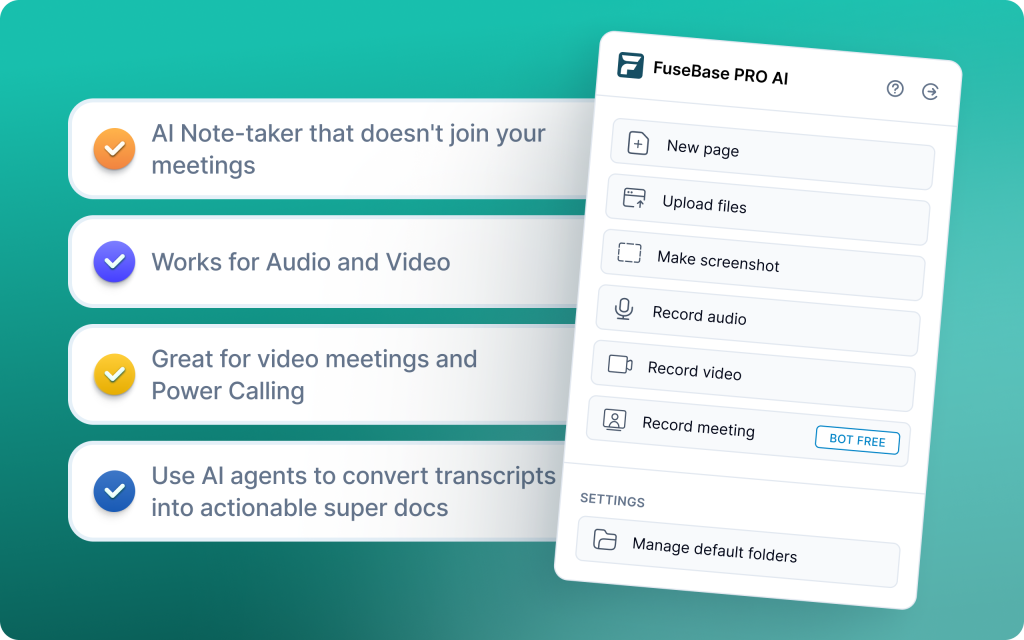
FuseBase is a bot-free AI meeting recorder and workspace that turns every Zoom, Teams, or Meet call into a shareable mini-room with recap, decisions, next steps, and supporting assets. Instead of a naked transcript link, you share a branded, white-label room on your domain that makes you look organized and premium. AI agents watch calls for risk, opportunities, and follow-ups, then turn those into real actions across your workflows.
Standout features:
- Bot-free recording that joins quietly across Zoom, Teams, and Meet
- Mini-rooms per meeting with recap, decisions, next steps, and attached assets
- White-label by default – your domain, logo, and colors for every shared link
- Internal vs external split so client-facing recaps stay clean while risks and coaching stay private
- Trackers for real revenue signals like no next meeting, budget gaps, scope creep, and renewal risk
- AI agents that auto-create tasks, trigger follow-ups, and even schedule save-the-deal meetings
- Rollup analytics by account, rep, and project to expose gaps, risks, and coaching opportunities across calls
2. Otter.ai – A practical Read.ai alternative for fast, collaborative transcription
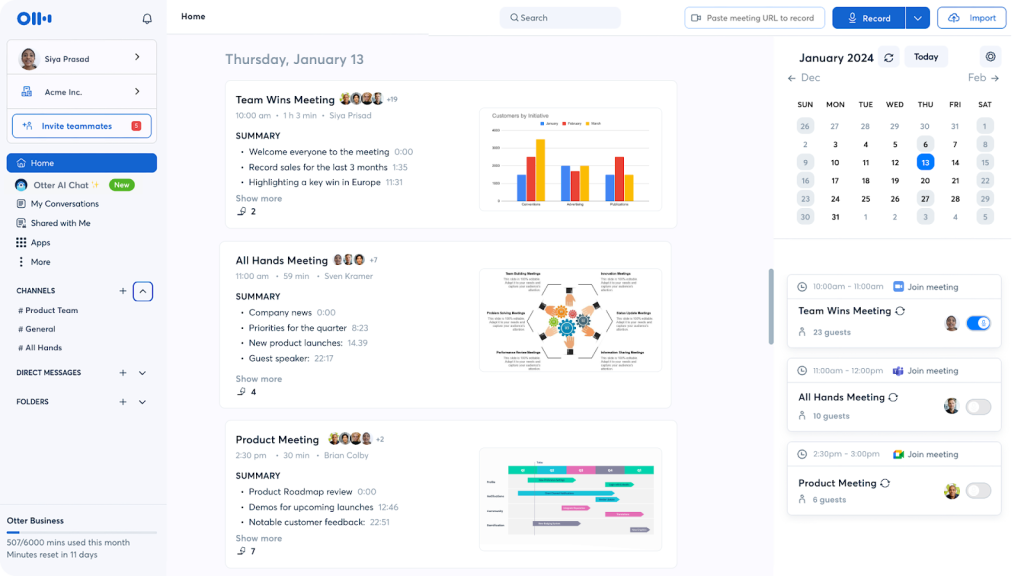
Otter.ai focuses on high-quality transcription and lightweight notes over deep meeting analytics. It works across Zoom, Google Meet, and Microsoft Teams, supports English, French, and Spanish, and delivers automatic meeting notes with action items to attendees. Teams get real-time collaboration (comments, highlights, emoji, task assignments) plus channels for ongoing communication. While Otter doesn’t record video and its deeper revenue intelligence sits in the Enterprise tier, it remains a budget-friendly staple with broad integrations and strong mobile support.
Standout features:
- Automatic post-meeting notes with action items sent to attendees
- File uploads for audio/video transcription (free plan supports 3 imports)
- Real-time collaboration: comments, highlights, emojis, task assignments, and team channels
- Powerful keyword and phrase search across transcripts for fast retrieval
- Integrations via Zapier to 7,000+ apps, plus mobile apps for on-the-go access
- Revenue intelligence available on Enterprise plans, but no native video recording
3. Avoma – A collaborative Read.ai alternative for cross-functional team
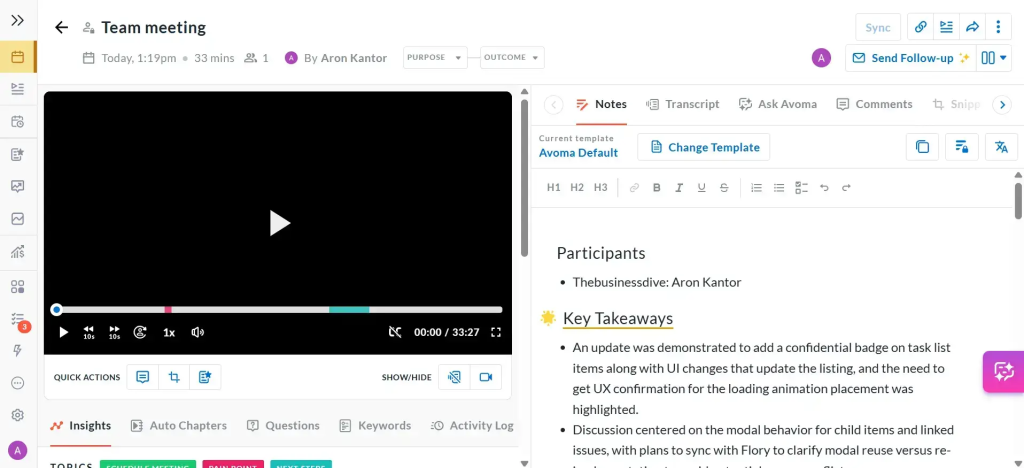
Avoma is a comprehensive meeting assistant built for sales, success, and product teams that need reliable transcription, AI notes, and collaborative workflows more than heavy coaching or forecasting. It auto-extracts action items, detects objections, highlights positive moments, and organizes conversations by topic and speaker so follow-ups are clear and searchable. Think centralized meeting intelligence with light revenue insights, easy sharing, and fast adoption across departments.
Standout features:
- Automated transcription across major web conferencing tools with speaker ID and comment attribution
- AI-generated notes plus summaries that categorize key moments, objections, and positives
- Shared agenda templates tied to transcripts for a planned vs discussed view
- Topic detection and meeting trend analytics to surface patterns across teams
- Snippet playlists to review and share call highlights without scrubbing full recordings
- Flexible sharing and exports to Slack, CRM, and docs for fast follow-through
4. Fireflies.ai – A versatile, budget-friendly Read.ai alternative
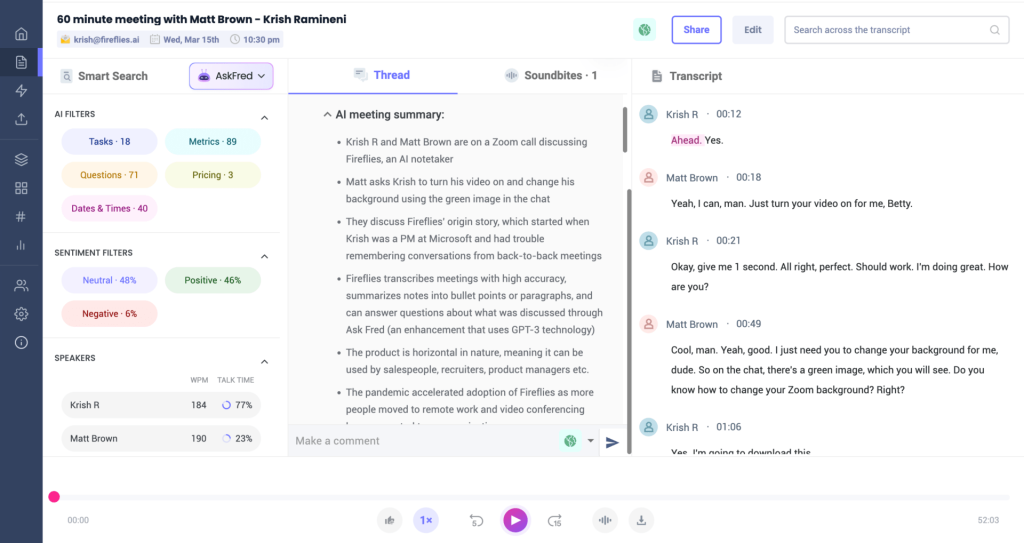
Fireflies.ai automatically joins, records, and transcribes meetings across Zoom, Google Meet, Microsoft Teams, and popular dialers, then generates shareable, accurate summaries. It supports 40+ languages, lets you click any line to play back the exact audio, and offers generous storage on the free plan with inexpensive upgrades for teams. With solid integrations and in-transcript collaboration, it’s a pragmatic choice for fast capture and recap at scale.
Standout features:
- Auto-join recorder across major conferencing apps and dialers
- AI summaries with customizable structure and clear action items
- Multilingual transcription with speaker IDs, clickable playback, and soundbites
- Generous starter limits – around 800 minutes free storage and file uploads, with higher tiers scaling to unlimited
- Integrations with CRMs, project tools, calendars, and collaboration suites for easy handoffs
- In-transcript collaboration via comments, pins, bookmarks, plus iOS and Android mobile apps
5. Fathom – A fast, free Read.ai alternative for individuals and lean teams
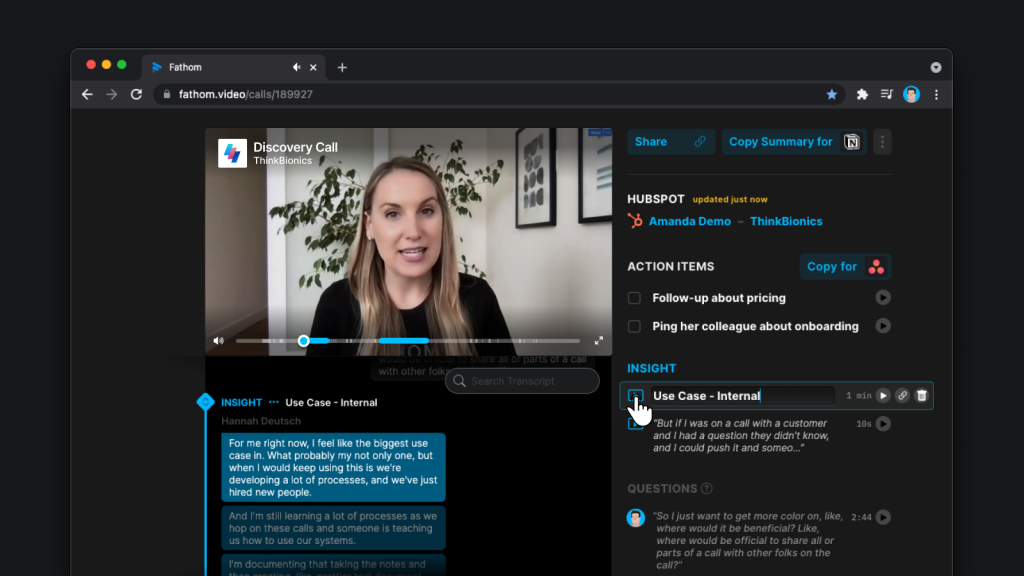
Fathom is a lightweight recorder and AI notetaker known for its generous free plan with unlimited recordings and storage for individuals. It’s built for speed and simplicity: instant summaries after each call, quick highlight clips, and easy sharing. On paid tiers, teams unlock searchable transcripts across meetings, making Fathom a practical choice when you want capture and recap without the complexity of heavy analytics.
Standout features:
- Unlimited recordings and storage on the free individual plan
- Instant post-call summaries with key takeaways, topics, and next steps
- One-click highlights and shareable video clips of key moments
- Team search and shared transcripts on paid tiers for cross-meeting visibility
- Native sync to HubSpot, Salesforce, and Notion to keep systems up to date
- Works with Zoom, Google Meet, and Microsoft Teams, with support for 20+ languages
6. tl;dv – A researcher-first Read.ai alternative for product teams
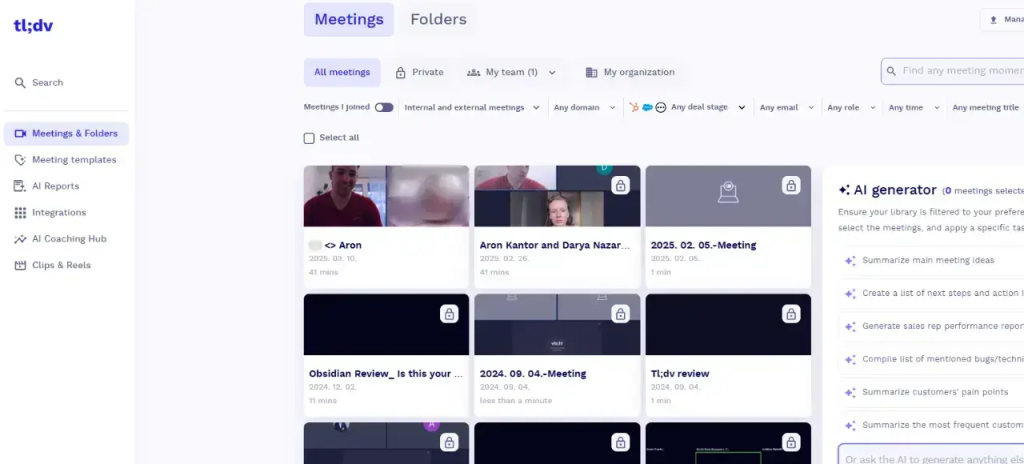
tl;dv is built for product and research work, not just generic meeting capture. It records across Zoom, Google Meet, and Microsoft Teams, transcribes, and turns interviews and workshops into structured, shareable insights. With tagging, team libraries, and multi-meeting analysis, it helps PMs and researchers surface patterns, update systems, and keep stakeholders aligned without digging through raw transcripts.
Standout features:
- Research-native tagging and highlights to mark key insights in seconds
- Cross-platform recording and transcription on Zoom, Meet, and Teams
- Team libraries to organize interviews and workshops for easy reuse
- Multi-meeting analysis to spot trends and send digest reports to your inbox
- Workflow add-ons like CRM auto-updates and drafted follow-up emails
- Collaboration in-context: comments, tags, and action assignments inside the transcript
7. Gong – An enterprise-grade Read.ai alternative for revenue intelligence
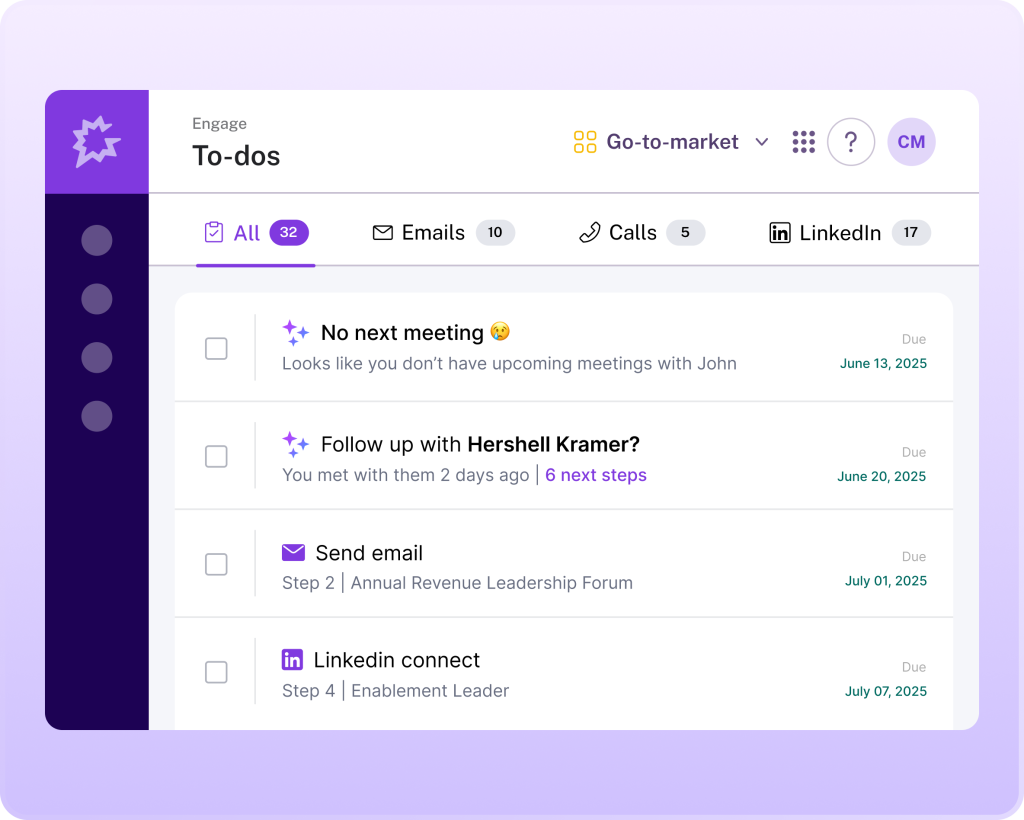
Gong is a revenue intelligence platform that turns sales conversations into pipeline insights, coaching cues, and forecast signals. It automatically transcribes and analyzes calls, surfaces patterns that affect win rates, and syncs structured insights into your CRM. With Call Spotlight, Gong now delivers accurate, user-friendly call summaries without relying on public-facing AI models, keeping data secure at enterprise scale. If your priority is deal health, forecasting, and rep performance – not just notes – Gong is the heavyweight choice.
Standout features:
- Crisp highlights, outlines, and call briefs for rapid review and handoffs
- Ask Anything: query calls in natural language to extract risks, next steps, and competitor talk
- Auto-logs structured summaries to the right contacts and opportunities
- Tend tracking, risk flags, and forecast support beyond note-taking
- Coaching analytics: patterns by rep, stage, and objection to target skill lift where it matters
- Enterprise-grade security and governance
8. MeetGeek – A structured, insights-first Read.ai alternative
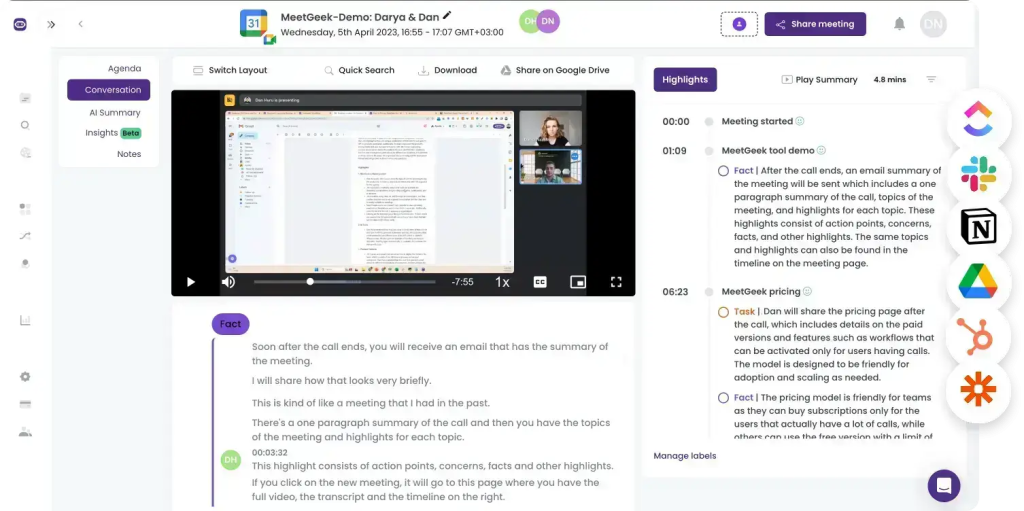
MeetGeek is a tidy AI meeting assistant that records, transcribes, and summarizes online and offline meetings, then syncs notes and action items into your CRM and collaboration stack. It pairs a searchable recording library with analytics like sentiment and engagement, so teams can spot trends, capture feature requests, and keep follow-ups moving without hunting through raw transcripts.
Standout features:
- AI summaries tailored to meeting type with action items, pain points, and requests
- Auto-recording with shareable video, timestamps, and highlights for quick reference
- Searchable, secure call library organized by team, meeting type, and custom tags
- Conversation insights with sentiment, speaker distribution, engagement, and agenda adherence
- 2,000+ integrations including HubSpot, Slack, and Google Calendar for seamless handoffs
- Multilingual transcription in 20+ languages, plus support for pre-recorded file uploads
9. Supernormal – A structured, workflow-first Read.ai alternative
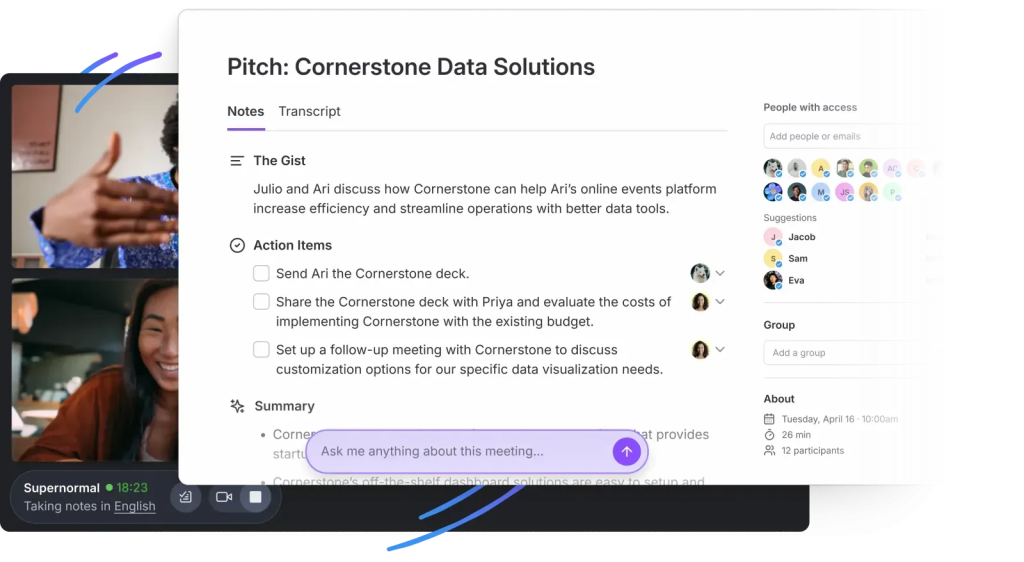
Supernormal focuses on structured meeting documentation and action item tracking. It records, transcribes, and generates notes across Google Meet, Zoom, and Microsoft Teams, then pushes decisions and tasks straight into your daily tools. Best for sales and client-facing teams, project leads, and orgs that want notes to match their process with customizable templates and tight integrations.
Standout features:
- Custom templates by meeting type so every summary fits your workflow
- Action item detection with automatic assignment into tools like Salesforce, HubSpot, Asana, Trello, Slack, and Notion
- Real-time AI assistant for live queries, clarifications, and instant highlights
- 60+ language support with auto-join recording on Meet, Zoom, and Teams
- Centralized library with topic and group-based organization for fast retrieval and sharing
- Direct sync of notes, insights, and tasks to CRM and docs so handoffs never get lost
10. Fellow – A meeting management focused Read.ai alternative
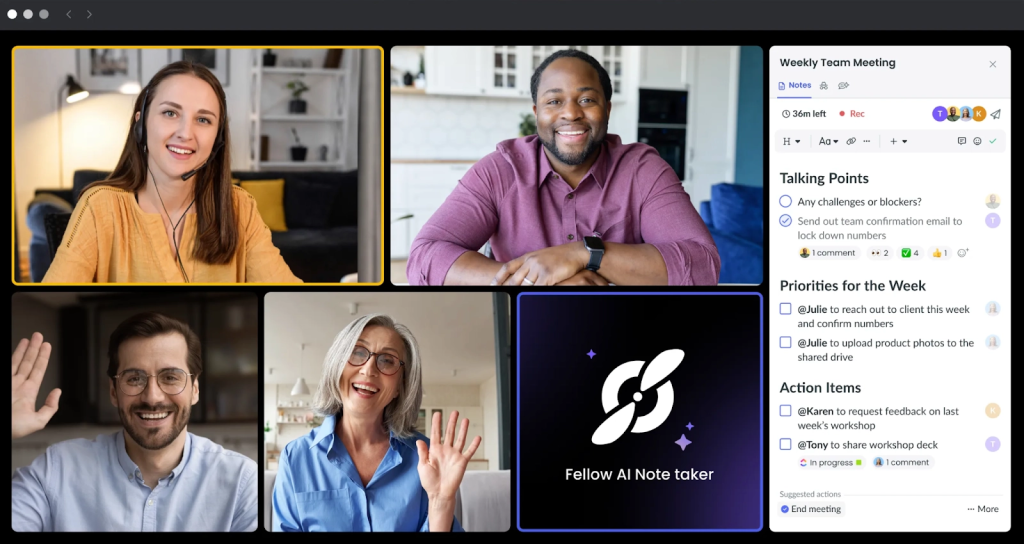
Fellow centers on end-to-end meeting productivity rather than heavy revenue intelligence. It delivers pre-meeting briefs, collaborative agendas, tailored talking points, and post-call notes so managers and teams can run back-to-back meetings without losing context. With transcripts and recordings across Zoom, Google Meet, and Microsoft Teams in 35+ languages, light conversation insights, and broad integrations, Fellow is ideal for leaders who want smoother prep, clearer outcomes, and cleaner follow-through.
Standout features:
- Pre-meeting briefs and agenda suggestions so you show up prepared with talking points
- Collaborative agendas, notes, and action item assignment for tight team execution
- Transcripts and recordings in 35+ languages, organized in channels for fast recall
- AI meeting chatbot and Ask Copilot to extract insights, answer questions, and draft follow-ups
- Meeting trend analytics to track time spent, recurring 1:1s, and productivity patterns
- Deep integrations with Salesforce, HubSpot, Pipedrive, Slack, Google Calendar, Asana, Jira, plus iOS and Android apps
Summary
The Read.ai alternatives landscape spans lightweight notetakers, researcher-first tools, and enterprise revenue intelligence. Options like Fireflies, Fathom, and Supernormal prioritize fast capture, clean summaries, and easy sharing. Product and research teams lean on tl;dv and MeetGeek for structured insights, tagging, and trend analysis. Avoma gives cross-functional teams a centralized assistant with action item extraction and snippet playlists, while Gong dominates at enterprise scale with deep deal health, coaching analytics, and secure CRM sync. Otter remains a budget-friendly staple for reliable transcription and collaboration with broad integrations and mobile access. And Fellow adds a strong meeting management layer with pre-meeting briefs, collaborative agendas, and post-call follow-through
FuseBase stands out as a bot-free recorder and workspace that turns every meeting into a branded mini-room with recap, decisions, next steps, and attached assets on your domain. Its internal vs external split keeps client summaries polished while AI agents watch for real revenue signals like scope creep, no next meeting, and renewal risk, then trigger tasks and follow-ups across your stack. If you want client-ready rooms and workflow automation tied to every call, start with FuseBase.