If speed and clarity are the priority for you, this review ranks the top tl;dv alternatives for fast, accurate transcription that’s ready to share. We tested for real-world performance: startup time, diarization quality, filler removal, glossary support, and multilingual accuracy.
You’ll see which tools deliver clean transcripts with minimal edits, plus instant highlights, searchable snippets, and batch export. The result: less time fixing punctuation and speaker labels, more time turning conversations into decisions, tasks, and updates.
Quick Summary of Best tl;dv Alternatives
- FuseBase – Bot-free capture with clean transcripts plus client-ready recaps and internal notes. Strong for accuracy-to-action workflows.
- Grain – Reliable recording, highlights, and searchable transcripts; strong for clips and shareable context.
- Bluedot – Bot-free, browser-first with polished notes; good accuracy and fast handoff to CRM, especially on Google Meet.
- MeetGeek – 50+ languages and high perceived accuracy; standout summaries.
- Fireflies.ai – 40+ languages, broad platform coverage; transcripts are strong for scale with searchable history.
- Supernormal – Real-time structured notes with consistent templates; transcripts geared toward decision and action capture.
- Otter.ai – Live captions and solid transcripts with team co-editing; strong shared documentation.
- Tactiq – Real-time, lightweight transcripts from captions with 60+ languages; great speed, lighter recording depth.
- Read.ai – Good transcripts plus engagement and sentiment analytics; strong for performance signals.
- Jamie – Bot-free system-audio capture with clean summaries; privacy-friendly and fast.
What is tl;dv?
tl;dv is an AI meeting recorder and transcription tool for Google Meet, Microsoft Teams, and Zoom. It focuses on fast, accurate, real-time transcripts and post-call AI summaries, making calls easy to search, share, and revisit. Users can tag moments, create highlights, and share clips, with transcription available in 30+ languages via a Chrome extension and native integrations.
For teams prioritizing streamlined transcription, tl;dv stands out for startup speed, solid diarization, and easy distribution of notes. It’s especially popular with researchers and workshop facilitators who need structured takeaways and searchable libraries without heavy setup.
Core capabilities for transcription-focused teams:
- Real-time transcription on Meet, Teams, and Zoom with 30+ language support
- AI-generated summaries with next steps and key themes
- Timestamped highlights, tags, and shareable clips
- Searchable library across past calls
- Fast deployment via Chrome extension and Zoom integration
Limitations and drawbacks of tl;dv
No native client vs internal split
tl;dv generates solid summaries, but it does not natively separate a polished client-facing recap from private internal risks, coaching notes, and tasks. Teams often have to edit or duplicate outputs to protect sensitive context.
Basic AI features for revenue teams
Compared to other platforms, tl;dv lacks revenue intelligence, sentiment analysis, and smart action tracking needed by sales and CS for coaching and pipeline hygiene.
Bot join and consent friction
Because a bot joins meetings, some clients raise privacy and compliance questions, especially in regulated accounts. This can add extra steps for approvals and disrupt meeting flow.
Limited integrations beyond core platforms
It works with Microsoft Teams, Zoom, and Google Meet, but broader, opinionated integrations into CRMs and project tools are lighter and often require workarounds.
Free plan limitations
While marketed as generous, the free tier carries practical caps on features and storage, and often restricts downloads or customization. Active teams outgrow it quickly and must upgrade to unlock core workflows.
Limited multi-meeting trend detection
Insights are centered on individual calls. Agencies and B2B SaaS teams looking to track risks, themes, and next-step gaps across accounts will find cross-call analytics limited.
10 Best Alternatives for Smarter Transcription Workflows
1. FuseBase – Best for turning meetings into tasks, trackers, and portals
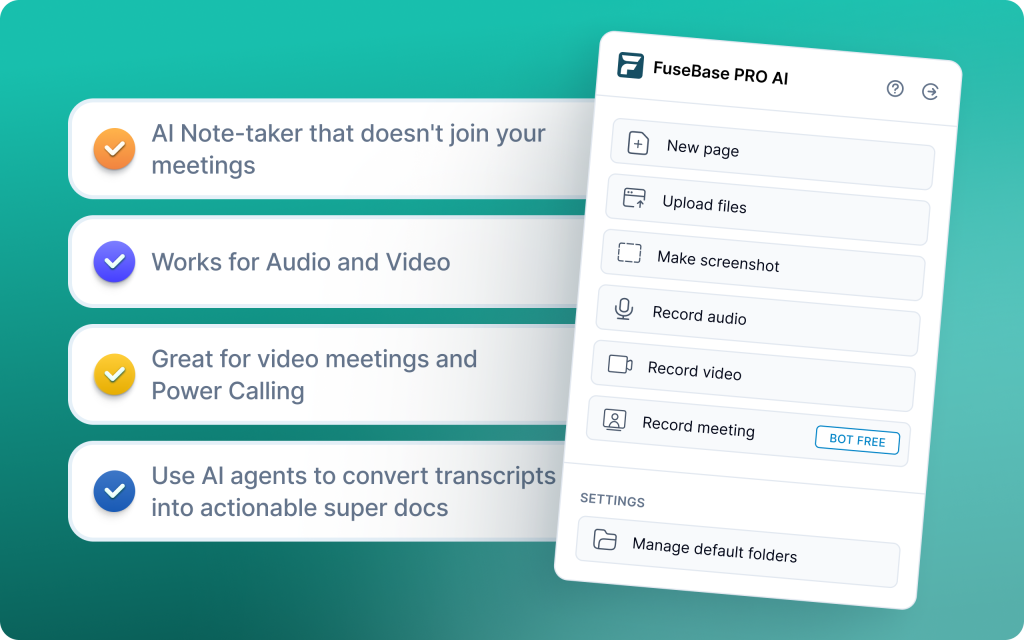
FuseBase is a bot-free recorder and workspace that upgrades “smarter transcription” into an operational workflow. Every Zoom, Teams, or Meet call becomes a shareable mini-room with a clean client-ready recap, files, and next steps. Unlike tl;dv links, each call lands in a lightweight client room that looks polished and guides buyers through decisions, actions, and supporting assets. These rooms are fully white labeled under your brand and domain, delivering a consistent experience across discovery, QBRs, onboarding, and renewals.
Beyond text accuracy, FuseBase tracks real revenue signals like missing next meeting, no budget discussed, scope creep vs SOW, renewal risks, repeated objections, and feature confusion. Its AI agents watch calls for risks, opportunities, and follow-ups, then turn them into real tasks, trackers, and CRM updates without manual copy-paste. Insights roll up into dashboards such as “calls with no next meeting” and “accounts with rising risk signals,” so the team can intervene before deals stall or delivery slips. If you want transcription to automatically produce client-ready outputs and reliable execution, FuseBase is the smarter tl;dv alternative built for agencies and B2B SaaS.
2. Grain – Best for CRM-synced highlights and follow-ups
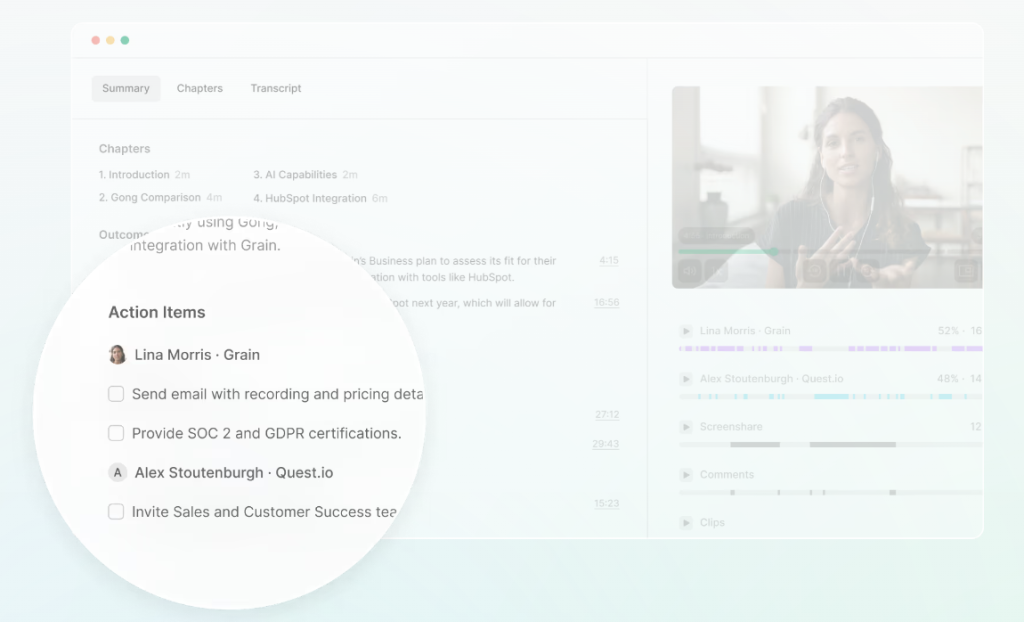
Grain positions itself as a smarter transcription workflow for revenue teams by pairing accurate notes with automatic CRM sync, follow‑up drafts, and time‑stamped highlights. During and after calls, it surfaces conversation insights like talk time, talk speed, filler words, and tracked keywords, then rolls those moments into reels and playlists to onboard reps faster.
Deal analytics give managers a quick read on pipeline activity and key themes without scrubbing full recordings. Compared to tl;dv, Grain feels more operational out of the box for sales and CS because notes, tasks, and deals push directly into the CRM. The tradeoffs are real though: integrations are narrower, there’s no robust coaching layer, and teams may miss a centralized call library for long‑term retrieval. For teams focused on sharing the right moments, syncing data, and sending clean follow‑ups rather than deep analysis, Grain is a practical tl;dv alternative.
3. Bluedot – Best for bot-free transcripts and instant CRM updates
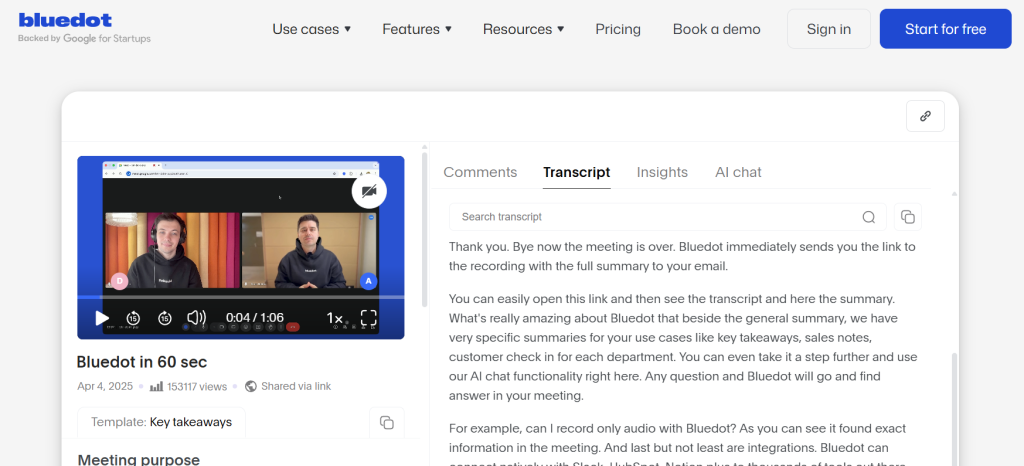
Bluedot is a bot-free, browser-based recorder that turns Google Meet conversations into polished notes and instant CRM updates. It captures high-accuracy transcripts without a meeting bot, reducing disruption and consent friction, then generates AI summaries with clear action items that land in Salesforce, Notion, or Slack. Designed for sales and support teams in Chrome, Bluedot also offers native Google Meet integration, CRM‑friendly exports, and search across past meetings so reps can pull context fast.
With AI‑customized notes by meeting type and detailed conversation analytics, teams get more than text – they get structured outcomes tied to deals and support workflows. Language coverage spans 17 languages, enough for many global teams that need consistent, client-ready outputs. If you want privacy-friendly capture and immediate system handoffs, Bluedot fits the modern, smarter-transcription stack.
4. MeetGeek – Best for multilingual transcripts with editable AI summaries
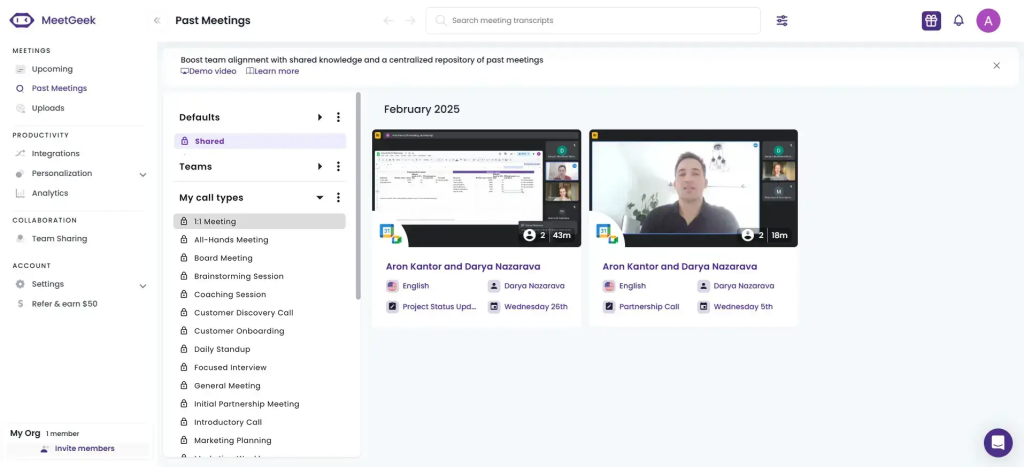
MeetGeek is a transcription-first recorder that upgrades workflow, not just accuracy. It captures Zoom, Teams, and Google Meet calls in 50+ languages, then turns them into editable summaries with tasks, next steps, concerns, facts, and decisions. During the call it tracks talk time, sentiment, and participation, making follow-ups smarter and coaching actionable without extra tools. Afterward, notes and snippets are easy to share, and a searchable library with folders, filters, and auto-detected meeting types keeps sales calls, 1‑on‑1s, and team sessions organized.
With 7,000+ integrations, you can push outcomes into CRMs and collaboration apps immediately, avoiding copy‑paste limbo. Mobile apps extend capture to in‑office meetings and events, so your corpus stays complete. If you want transcription that reliably becomes decisions, actions, and coaching cues in the same flow, MeetGeek is a compelling tl;dv alternative.
5. Fireflies.ai – Best for multilingual capture and searchable history
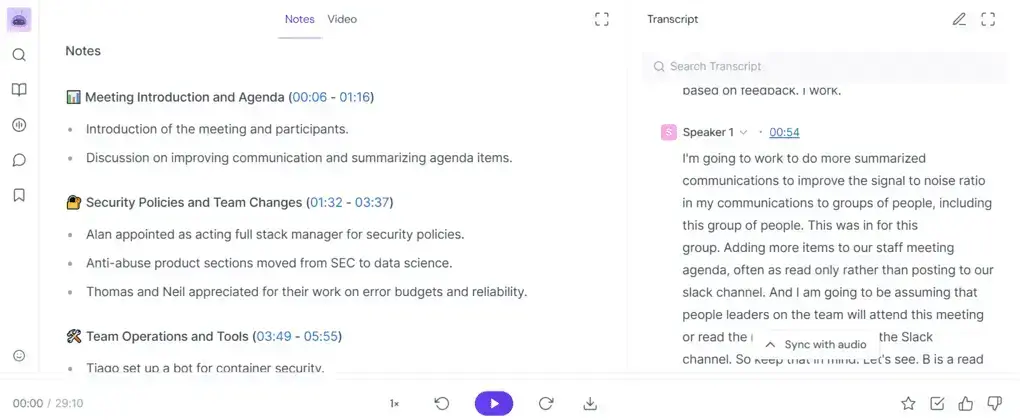
Fireflies.ai is a platform-agnostic recorder that standardizes smarter transcription across Zoom, Teams, Google Meet, and more. It delivers accurate transcripts in 40+ languages, then layers searchable conversation history, tagging, and filters so teams can retrieve moments by topic, speaker, or theme without scrubbing audio. Rollouts are fast and affordable, and paid tiers add unlimited storage plus integrations with collaboration and CRM tools to keep notes, deals, and tasks in sync.
For scaling teams, Fireflies excels at consistent capture, centralized knowledge, and quick reference, which shortens handoffs and cuts rework. While advanced coaching depth is lighter, its combination of coverage, cost, and searchability makes day-to-day workflows smoother. If your goal is reliable multilingual transcription that connects to your stack and stays discoverable, Fireflies checks the boxes.
6. Supernormal – Best for standardized, real-time decision-focused documentation
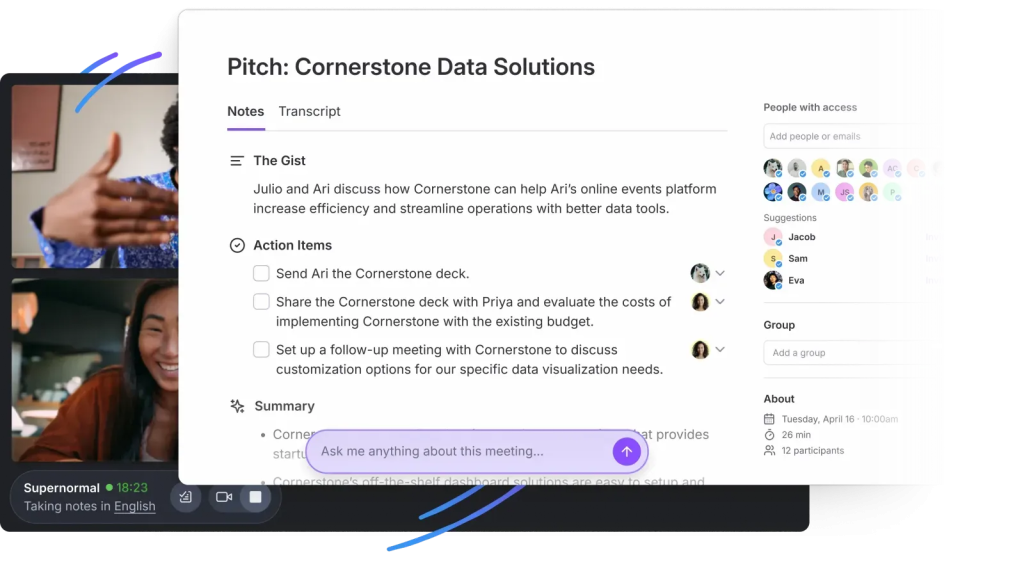
Supernormal is a decision-focused meeting assistant that turns Zoom and Google Meet conversations into structured, ready-to-use documentation in real time. It generates agendas, live recaps, and action items during the call, then standardizes outputs with templates so follow-ups, decisions, and owners are clear without post‑meeting cleanup. Transcription feeds directly into these templates, producing consistent, searchable notes that teams can trust across recurring workflows.
Deep integrations with Google Docs, Slack, and Notion keep summaries where people already work, accelerating distribution and accountability. For remote teams running frequent calls, this “transcript-to-execution” flow shortens the gap between what was said and what gets done. If your goal is smarter transcription that enforces structure and immediate action, Supernormal is a strong tl;dv alternative.
7. Otter.ai – Best for collaborative live captions and shared notes
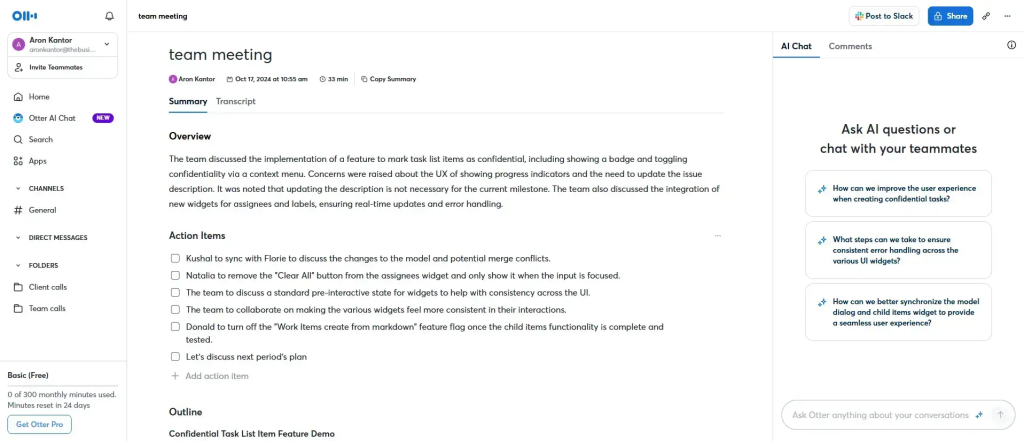
Otter.ai is a real-time transcription tool built for smarter, collaborative note-taking, with live captions that help hybrid teams maintain a single source of truth during meetings. Team members can access and annotate content simultaneously, use channels to keep conversations organized, and leave the meeting with shared understanding instead of waiting for post-call handoffs. After the call, Otter auto-sends summaries and action items, supports file uploads for transcription, and offers mobile apps so notes are always at hand.
Zapier connectivity routes notes into thousands of apps for distribution and follow-up, while revenue intelligence is available on Enterprise for sales-heavy workflows. Keep in mind that most plans don’t include video recording and multilingual support is limited primarily to English with partial coverage for Spanish and French. As a tl;dv alternative, Otter excels when inclusive captions and live co-editing are more important than deep analytics or bot-free recording.
8. Tactiq – Best for real-time transcription and quick action items
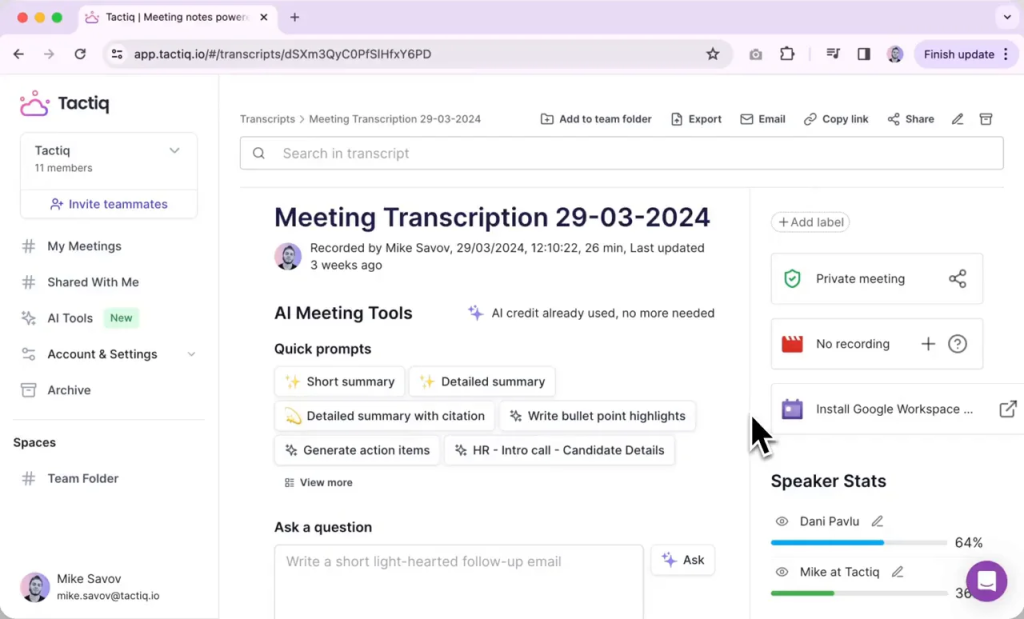
Tactiq is a lightweight “AI Meeting Kit” that prioritizes real-time transcription and fast follow-through. It captures speaker-identified notes with timestamps across Google Meet, Microsoft Teams, and Zoom, then summarizes the call, extracts action items, and can even propose the next meeting agenda. With translations spanning 60+ languages and a Chrome extension for instant highlights, Tactiq helps individuals and small teams document client calls without heavy setup.
Post-call, you can ask the AI questions about what was discussed, create custom actions, and push updates into tools like Jira or Slack, while engagement analytics add signal that many simple notetakers lack. Video recording is limited and the free plan is tight, but the core experience is fast, accurate, and easy to slot into day-to-day workflows. If you value live clarity, lightweight setup, and quick handoffs over deep sales coaching or multi-meeting analytics, Tactiq fits the brief.
9. Read.ai – Best for engagement analytics and coaching-ready summaries
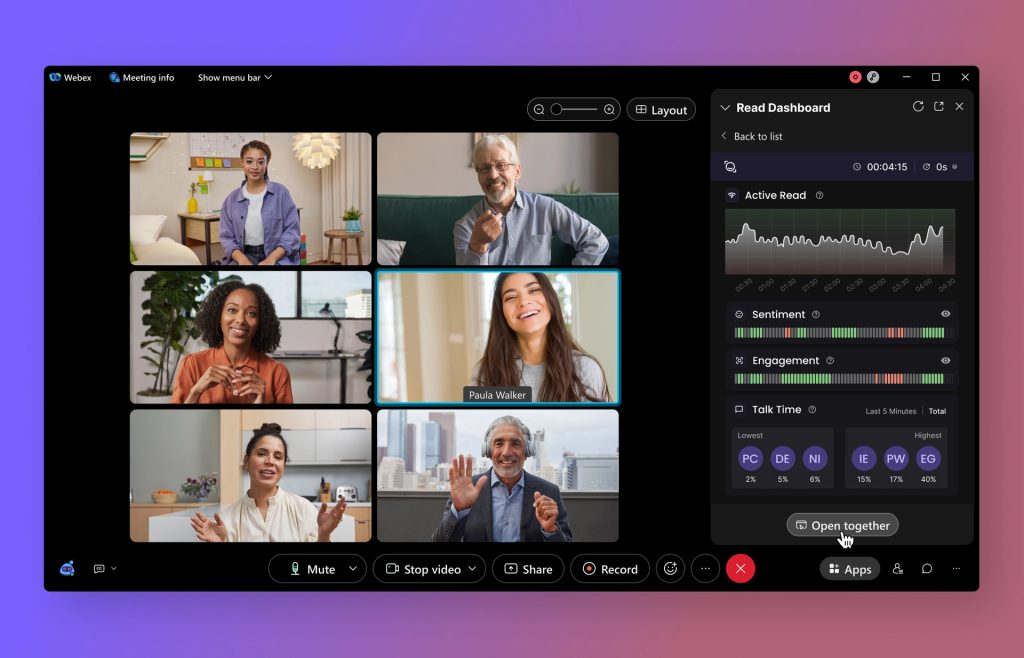
Read.ai is built for transcription workflows that combine automatic note-taking with engagement analytics and coaching. It transcribes meetings while tracking sentiment, participation, and speaker performance, then produces clean, AI-powered summaries that surface decisions and action items without extra cleanup. Transcription 2.0 adds real-time audience reactions and personal coaching tied to how you speak, so teams can improve delivery over time.
The Search Copilot lets you query across meetings, emails, and documents in natural language, turning past conversations into an instantly accessible knowledge layer. Setup is quick, summaries are clear, and in-meeting branding keeps participants oriented, supporting teams that multitask during discussions. Note that some users report bot friction and a constrained free plan, so larger orgs should validate deployment and controls before standardizing.
10. Jamie – Best for private, bot-free summaries and decision tracking
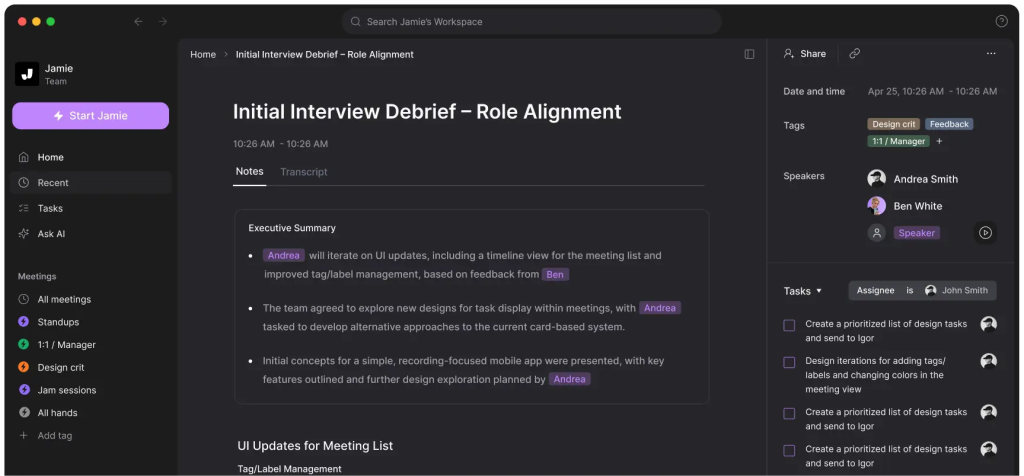
Jamie is a bot-free recorder that captures system audio directly, so it never joins as a participant and keeps calls private and unobtrusive. It works across major platforms like Teams and Google Meet, supports offline recording, and auto-deletes audio after transcription to minimize retention risk. Beyond clean transcripts, Jamie focuses on extracting decisions and action items with customizable summary templates that fit your workflow.
Speaker recognition attributes who said what without extra steps, and multi-language support makes it practical for global teams. For teams who value privacy, speed, and clear, actionable outputs over heavy in-meeting collaboration, Jamie is a strong tl;dv alternative.
Choosing the best tl;dv alternative
Streamlined transcription in 2026 means more than “record and dump a text file.” The best tl;dv alternatives combine fast start-up, high accuracy, solid diarization, broad language support, and clean exports with instant summaries and simple sharing.
If you need transcription that rolls straight into client-ready context and next steps, FuseBase stands out; if you prioritize coaching analytics, standardized templates, or lightweight, real-time capture, options like Read.ai, Supernormal, and Tactiq also shine. If you want CRM-synced highlights and follow-ups, Grain fits; for bot-free Google Meet workflows with polished notes and instant CRM updates, look to Bluedot.
MeetGeek excels at multilingual accuracy with editable summaries and coaching cues, while Fireflies.ai is best for broad platform coverage and a highly searchable conversation history. Otter.ai shines for collaborative live captions and shared notes; and Jamie delivers private, bot-free recording with decision-centric outputs. Pick the tool that minimizes cleanup and maximizes re-use of your meeting content within minutes, not hours.